Smart Solutions for Construction Heat Safety:
Protecting Your Crew in Extreme Temperatures
Introduction
Smart Heat Safety for Smart Contractors
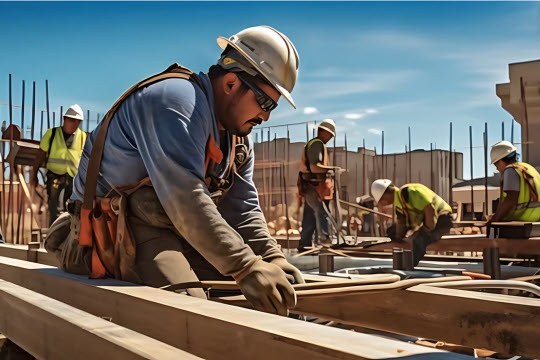
Construction workers face one of the highest risks for heat-related illnesses among all industries. Spending long hours outdoors performing physically demanding tasks, often while wearing protective equipment, creates a perfect storm for heat stress—especially as temperatures continue to rise and heat waves extend well beyond traditional summer months.
Let’s explore how Safety requires a personal touch. New technology allows safety professionals to scale their impact and effectiveness without compromising their ability to connect with workers.
The Growing Challenge of Heat on Construction Sites
For contractors managing projects in hot climates like Arizona, Texas, Nevada, and Florida, or those working on projects during peak summer months anywhere in the country, heat safety isn’t just a regulatory requirement—it’s a fundamental responsibility that directly impacts worker health, project timelines, and your company’s reputation.
The challenge becomes even more complex when you consider:
- Remote or spread-out work sites where supervisors cannot physically monitor all workers simultaneously
- Varying heat exposure zones from open areas to partially enclosed structures
- Worker rotation and movement between different temperature environments throughout the day
- New hires and temporary workers who may not be acclimatized to heat
- Compliance documentation required by OSHA and state-specific heat regulations
Traditional heat safety programs—while essential—often struggle to scale across large, dynamic construction environments. This is where intelligent connected worker technology becomes a game-changer.
The Four Pillars of Heat Safety (Enhanced by Smart Technology)
1. Comprehensive Heat Training and Awareness
Every construction worker needs to recognize the early warning signs of heat illness: excessive sweating, muscle cramps, weakness, dizziness, confusion, and nausea. While training provides this foundation, maintaining awareness across an entire shift, every day, is challenging.
How SmartX Safety Helps:
Our Smart Badge system creates an automated safety net that complements human vigilance. By tracking worker locations and time spent in high-heat zones, the system can:
- Alert supervisors when workers exceed safe heat exposure durations
- Identify workers who may need check-ins based on their movement patterns
- Provide data for safety briefings about which areas pose the highest heat risk
- Support emergency response by providing exact worker locations if someone becomes ill
Instead of relying solely on workers to self-report or supervisors to remember who’s been where for how long, technology creates an objective monitoring layer that fills critical gaps.
2. Hydration Management at Scale
Proper hydration is the single most important factor in preventing heat illness. Workers should drink water every 15-20 minutes in hot conditions—but on busy job sites, it’s easy to lose track of time and forget to hydrate regularly.
How SmartX Safety Helps:
By integrating Smart Badge technology with your hydration station locations:
- Zone-based reminders: Configure alerts that prompt workers to hydrate when they’ve been in hot zones for specific durations
- Water station analytics: Track which hydration stations are being used and identify dead zones where workers lack easy access to water
- Compliance verification: Generate reports showing break patterns and hydration station proximity to demonstrate your heat safety program’s effectiveness
Some contractors also use geofencing around hydration stations to track usage patterns and optimize placement, ensuring workers never work more than a short walk from water.
3. Strategic Shade and Cooling Access
OSHA requires that when temperatures exceed certain thresholds (typically 80-95°F depending on state regulations), employers must provide shade areas where workers can cool down. But how do you ensure workers are actually taking advantage of these cooling areas?
How SmartX Safety Helps:
Our location tracking system provides visibility into rest break patterns:
- Cooling zone monitoring: Identify workers who aren’t utilizing shade/cooling areas during breaks
- Usage analytics: Determine if cooling stations are optimally placed based on actual worker traffic patterns
- Mandatory break enforcement: Configure automatic notifications when workers need to take cooling breaks based on time in heat zones
- Emergency mustering: During heat emergencies, quickly identify and direct all workers to cooling areas
For projects in remote areas where natural shade is limited, this data helps you determine the optimal number and placement of portable cooling trailers, pop-up tents, or air-conditioned break areas.
4. Heat Acclimatization Protocols
Workers new to heat exposure—whether new hires, workers returning from time off, or crews working in unseasonably hot conditions—need gradual acclimatization over 7-14 days. This means shorter shifts and more frequent breaks initially.
How SmartX Safety Helps:
The Smart Badge system can be configured to support acclimatization programs:
- New worker identification: Tag new or returning workers in the system to apply different heat exposure thresholds
- Progressive exposure tracking: Monitor heat exposure times and automatically enforce acclimatization schedules
- Buddy system support: Link paired workers in the system so supervisors can verify new workers are being monitored by experienced crew members
- Compliance documentation: Generate reports proving adherence to acclimatization protocols for regulatory requirements
Beyond Basic Heat Monitoring: The Complete Safety Picture
While heat safety is critical, SmartX Safety’s connected worker platform addresses the full spectrum of construction site safety challenges:
Real-Time Emergency Response
When a heat-related emergency occurs, every second counts. Our system provides:
- Instant location data for EMS responders
- Automated emergency mustering to account for all personnel
- Communication tools to alert nearby workers who can provide immediate assistance
- Historical tracking showing where the affected worker has been and how long they’ve been exposed to heat
Confined Space and Permit Management
Construction sites often include permit-required spaces where heat buildup is extreme:
- Monitor workers in confined spaces with automatic alerts
- Track entry/exit times for permit compliance
- Ensure rescue teams know exact locations during emergencies
Site Access Control
Control who can access different areas based on training and certification:
- Restrict access to high-heat zones for workers without proper heat safety training
- Track subcontractor movements for liability and safety management
- Maintain audit trails for compliance purposes
Workforce Analytics
Use historical data to continuously improve your safety program:
- Identify patterns that preceded heat-related incidents
- Compare heat exposure across different crews or project phases
- Demonstrate safety program ROI to project owners and insurers
- Benchmark safety metrics across multiple job sites
Implementation Made Simple
One of the biggest concerns contractors have about connected worker technology is implementation complexity. SmartX Safety’s solution is designed specifically for the realities of construction environments:
Minimal Infrastructure: Our LoRaWAN-based architecture requires far fewer gateways than Wi-Fi systems, reducing installation costs and setup time. Gateways can be deployed on existing structures like crane towers, material lifts, or temporary buildings.
Rugged, Worker-Friendly Devices: Smart Badges are built for construction—dustproof, water-resistant, and designed to withstand drops and impacts. Workers clip them on their hard hats or vests and forget about them.
Scalable Design: Start with one site or one crew and expand as you see results. The system scales from 20 to 2,000+ workers without major infrastructure changes.
Integration Ready: Connect with your existing safety management systems, ERP platforms, and time-tracking solutions.
Rapid Deployment: Most construction sites can be fully operational within 2-5 days depending on size.
Real-World Impact: Making Heat Safety Measurable
Consider this scenario: A large commercial construction project in Phoenix with 200 workers across multiple zones (foundation work, steel erection, HVAC installation, electrical systems).
Without connected worker technology:
- Supervisors manually track break schedules
- Workers self-report heat exposure concerns
- Cooling stations placed based on best guesses
- Incident reports rely on after-the-fact reconstruction
- Proving compliance requires extensive paperwork
With SmartX Safety:
- Automated alerts when any worker exceeds heat exposure limits
- Real-time dashboard showing all worker locations and heat zone durations
- Data-driven cooling station placement based on actual traffic patterns
- Instant location data if a worker needs medical attention
- Automated compliance reports for OSHA and insurance audits
The difference isn’t just about technology—it’s about giving safety managers superhuman situational awareness and the ability to prevent problems before they become emergencies.
Regulatory Compliance: Staying Ahead of Requirements
Heat safety regulations continue to evolve. California, Washington, and Oregon have specific heat illness prevention requirements, and federal OSHA is developing comprehensive heat standards that will likely apply nationwide.
SmartX Safety helps you stay ahead of regulatory changes by:
- Providing objective documentation of your heat safety efforts
- Creating audit trails showing worker exposure and break compliance
- Generating reports that demonstrate proactive safety management
- Supporting continuous improvement through data analysis
Return on Investment: Beyond Preventing Incidents
While preventing heat-related illnesses is the primary goal, connected worker technology delivers measurable business benefits:
Reduced Workers’ Compensation Costs: Fewer heat-related incidents mean lower insurance premiums and direct costs.
Improved Productivity: Workers who stay properly hydrated and rested work more efficiently and make fewer mistakes.
Enhanced Reputation: Project owners increasingly demand contractors with advanced safety programs, giving you a competitive advantage.
Better Risk Management: Insurers may offer premium reductions for contractors using proactive monitoring technology.
Faster Incident Response: When incidents do occur, rapid response minimizes severity and associated costs.
Conclusion - Take the Next Step
As construction seasons extend and heat waves intensify, the question isn't whether to invest in more innovative heat safety solutions—it's how quickly you can implement them to protect your most valuable asset: your people.
SmartX Safety specializes in helping contractors of all sizes implement connected worker solutions tailored to their specific projects, climates, and operational needs. Whether you're managing a single large project or multiple concurrent sites, we can design a system that enhances your heat safety program while delivering broader safety and operational benefits.
Get Started Today
Contact SmartX Safety to:
- Schedule a consultation about your heat safety challenges
- See a demonstration of connected worker technology in action
- Get a customized proposal for your projects
- Learn how other contractors are using our solutions to protect their crews
Don’t wait for the next heat wave to put your workers at risk. Take control of heat safety with intelligent monitoring that works as hard as your crew does.
Combining for Workplace Safety and Optimization AI and a Connected Workforce for Workplace Safety and Optimization with Smartx HUB
SmartX Safety provides intelligent personnel tracking and safety monitoring solutions for industrial facilities worldwide. Our LoRaWAN and BLE-based platforms help companies protect workers, improve operational efficiency, and maintain compliance in challenging environments, including manufacturing, mining, construction, and logistics operations.
More Related Topics
Explore our blog for insightful articles, personal reflections and ideas that inspire action on the topics you care about.